
Weekly Tiffin vs Meal Prep vs Takeaway: What Works Best in Birmingham?
Feeding yourself or your family every day takes time, money and energy. In Birmingham, most households end up relying on some mix of three options: a weekly tiffin, a meal prep service or takeaways. Each has its place, but they suit very different lifestyles and budgets.
This article compares the three side by side on cost, time, taste, health and halal confidence, so you can decide which approach works best for your household.
The Three Options Explained
Weekly Tiffin
A weekly tiffin is a set of home-cooked dishes prepared together and collected or delivered in one go. In the South Asian tradition, it usually means curries, lentils, rice and bread, the same food you would cook at home. You can read more in our complete guide to halal tiffin in Birmingham.
Meal Prep Services
Meal prep companies deliver pre-portioned, often calorie-counted meals designed for convenience or fitness goals. Menus tend to feature grilled chicken, pasta and rice bowls, and meals are usually packed individually.
Takeaway
Takeaway means ordering a cooked meal when you want it, from a restaurant, a delivery app or a home kitchen. It is the most flexible option but also the least predictable on cost.
Comparing Cost
The fairest way to compare is cost per portion, including delivery and service fees.
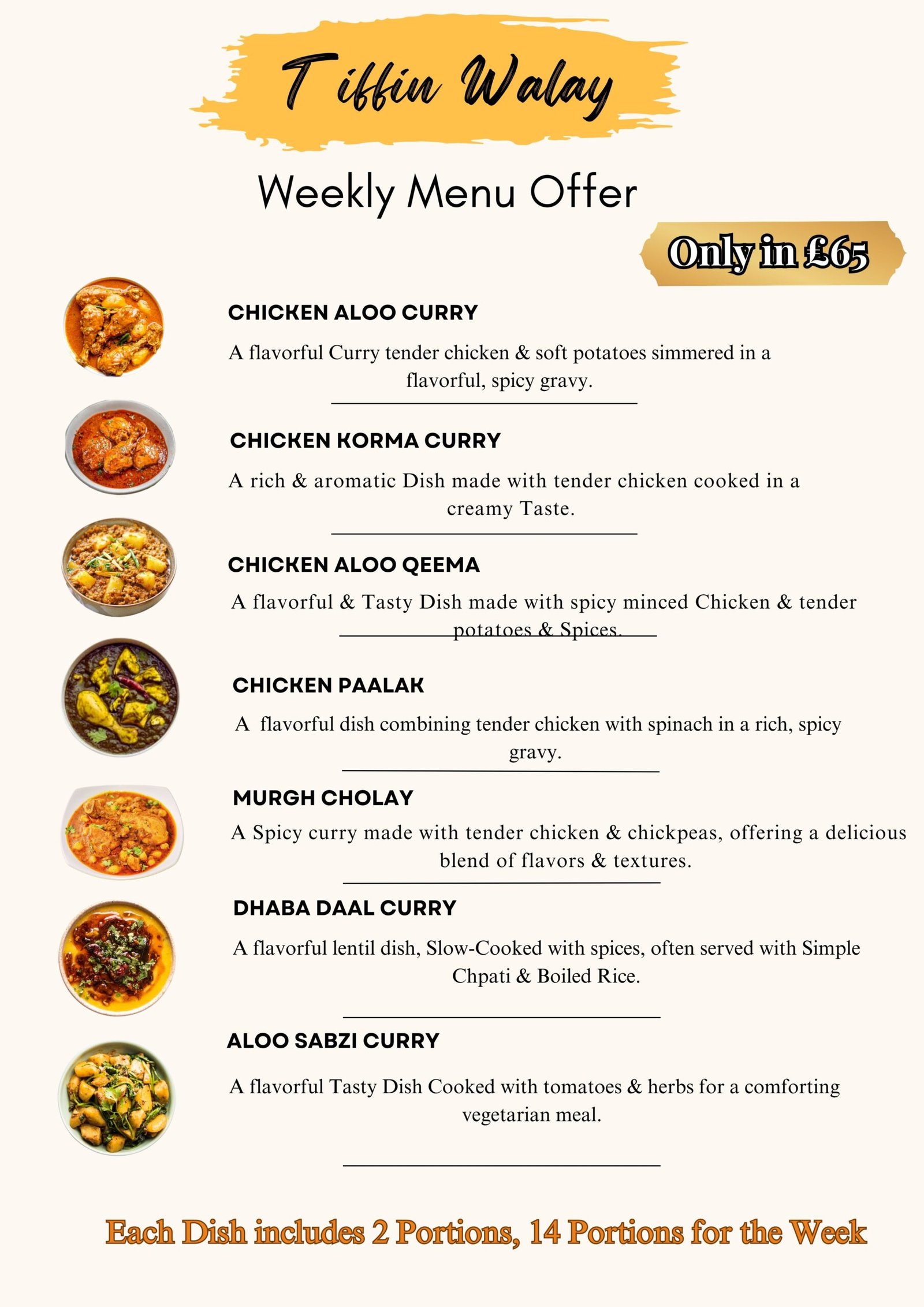
- Weekly tiffin: usually the lowest cost per portion for home-style food. The Tiffin Walay Weekly Special Tiffin, for example, gives 14 portions for £65, around £4.64 per portion, with free collection available.
- Meal prep: priced per meal and often more expensive per portion, especially for smaller orders.
- Takeaway: the menu price is only part of the story. Delivery fees, service charges and minimum orders can add a significant amount, so regular takeaways quickly become the most expensive habit.
Cooking entirely from scratch is still the cheapest in ingredients alone, but it costs you time, which is the next consideration.
Comparing Time and Effort
A weekly tiffin needs one order and one collection or delivery each week. Meal prep is similar, with a weekly or regular subscription. Takeaway needs a decision and an order every single time, and peak-time waits can be long.
For busy households, the real difference is mental effort. With a weekly tiffin in the fridge, the question “what are we eating tonight?” is already answered.
Comparing Taste and Variety
This is where preferences matter most. Meal prep menus are designed for consistency and nutrition tracking, so they can feel repetitive. Takeaways offer variety but often in a restaurant style that many people do not want every day.
A weekly tiffin sits in between. You get several different dishes each week, cooked in a home style, with menus that change from week to week. If what you want is the taste of homemade food in Birmingham, a tiffin is the closest match.
Comparing Health and Control
Meal prep services are strong on nutritional information, which suits people tracking calories or macros. Restaurant takeaways are usually the least healthy, with more oil, cream and salt.
Home-style tiffin food is naturally balanced: lentils, chickpeas, vegetables and moderate portions of meat and rice. You also have the advantage of speaking to the cook, so you can ask for milder spice or less oil if you need it.
Halal Confidence
For anyone who eats halal, this can be the deciding factor. Some meal prep companies offer halal options but may not be fully halal, and ingredients can be hard to check. Many takeaways are halal, but it is worth confirming, especially on apps where information is limited.
A dedicated halal tiffin kitchen removes the guesswork. At Tiffin Walay, everything we cook and bake is halal, and you can message us directly if you have any questions about ingredients.
Which Option Suits You?
A Family of Four
A weekly tiffin covers most dinners at a lower cost per portion than takeaways, with the occasional takeaway as a treat. Many families also order extra dishes from the daily menu when guests visit.
A Single Professional
A weekly tiffin can cover lunches and several dinners. If you only want food on certain days, ordering individual dishes may suit you better.
Students Sharing a House
Splitting a weekly tiffin between two or three housemates keeps costs low and the food far better than instant noodles.
Fitness-Focused Eaters
A meal prep service may suit strict calorie targets. That said, home-style dishes like daal, chana and chicken curry are high in protein and fibre and fit well into a balanced diet.
Occasional Treat Seekers
If you only eat out once in a while, takeaway is perfectly fine. Choosing a home-cooked halal takeaway gives you a lighter, more homely version of a Friday night favourite.
A Mixed Approach Works for Many Households
You do not have to pick just one. Many Birmingham households use a weekly tiffin as the foundation for their meals, add a takeaway at the weekend and cook a favourite dish themselves on a day off. This keeps costs under control, adds variety and still leaves room for the joy of cooking when you have time. If lunch is your main challenge, our article on finding a halal lunch in Birmingham has practical ideas.
What a Week With a Weekly Tiffin Looks Like
It can be hard to picture how a weekly tiffin fits into real life, so here is a simple example for a couple who both work full time in Birmingham.
Monday: the tiffin is collected after work and everything goes straight into the fridge. Dinner is the rice dish, eaten fresh on day one, with a portion of daal on the side.
Tuesday: one portion of chicken curry goes into a lunch box for the office. In the evening, the couple share a vegetable dish with roti.
Wednesday: lunch is leftover daal. Dinner is a second curry, reheated until steaming hot, with a quick salad.
Thursday: the portions they will not get to are moved to the freezer, so nothing goes to waste. Dinner is chana with fresh bread.
Friday: a takeaway treat to end the week, ideally from a home kitchen so it still feels light.
Weekend: frozen portions come out for an easy Saturday lunch, and Sunday is a cooking day for anyone who enjoys it.
In this routine, nobody spends their weeknights cooking, lunches are sorted without buying meal deals, and the weekly food bill is predictable. The same idea works for a family, with more portions or an extra dish from the daily menu, and for students, who can split one tiffin between housemates.
The key is planning the order you eat things in. Rice dishes first, sturdier curries and lentils later, and the freezer as your safety net. Once that habit is in place, a weekly tiffin becomes one of the easiest ways to eat well every day.
Frequently Asked Questions
Is a weekly tiffin cheaper than takeaway?
For most households who eat home-style food regularly, yes. Once delivery and service fees are included, several takeaways a week usually cost more per portion than a weekly tiffin.
Can a weekly tiffin replace meal prep?
For many people it can, especially if your goal is balanced home food rather than precise calorie counting.
How long does a weekly tiffin last?
Refrigerate it as soon as you receive it, eat rice dishes first and freeze any portions you will not eat within a couple of days. Always reheat food until steaming hot.
The Bottom Line
Takeaways are great for treats, meal prep suits strict nutrition goals, and a weekly tiffin is the most practical way to eat home-style halal food every day at a fair price. If that sounds like your household, take a look at this week’s tiffin and see how much easier mealtimes can be.